Internal Audit
Turn Findings across your own Location network into owned Actions with due dates, resolution Evidence and verification.
Explore the product flow
Run your own operating network end to end, or inspect independent businesses with different Templates and verify the outcome on a later visit.
An Organisation uses one operating model. Templates, field Evidence and immutable reporting are shared; accountability differs.
Turn Findings across your own Location network into owned Actions with due dates, resolution Evidence and verification.
Explore the product flowInspect independent businesses with the right Template. They handle correction outside the product; you verify it on the next Audit.
Explore External AuditChoose by accountability model before auditor count. Corrective work inside one Organisation and verification across independent businesses require different product flows.
Each product area has a distinct job. The Audit Trace connects the same Template Version, Evidence, Finding and outcome throughout.
Anonymised product example
Real product screens across this site follow one sample workflow with no customer data. This keeps the path from planned standard to field response and management record easy to follow.
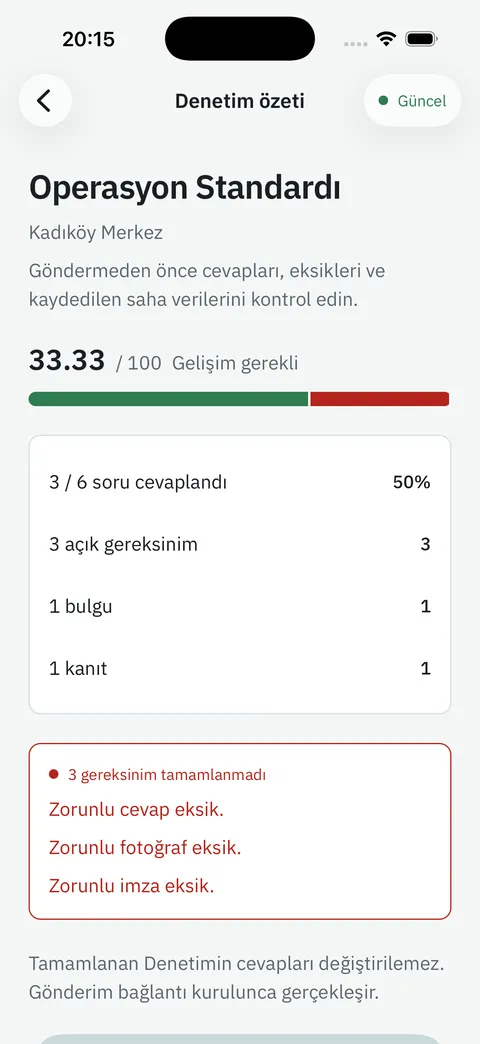
Start with the standard, field conditions and access scope—not a technology checklist. Custom integrations and SSO are not standard product capabilities; they are evaluated in an Enterprise proposal.
1
Define the first Template Version, pilot Locations, recurrence and assignment rule.
Explore planning2
Confirm offline needs, required Evidence types and the conditions for sending field records.
Explore the mobile flow3
Review Organisation isolation, Role scope and custom requirements handled during proposal scoping.
Review security boundariesExplore the live examples first, then compare the tier that fits your User and Location capacity.
Enter the product with prepared industry records and no account.
Open the demosCompare Starter, Team and Enterprise by capacity.
Compare pricingTell Kompanse about your current Audit standard and Location structure.
Contact usShare your current standard and Location structure in a meeting request.